

Has the Spanish Golden Visa program been abolished?
After a protracted political process, the Golden Visa programme in Spain officially ended on 3rd April 2025. So yes, Spain did cancel the Golden visa programme.
With this move, Spain effectively ended a 12-year investment-based residency pathway that attracted thousands of non-EU investors.
This landmark decision represents a significant shift in European immigration policy, as Spain joins Portugal and other nations in restricting investment-based residency programs.

The termination of Spain’s golden visa program affects both prospective applicants and existing permit holders, though current golden visa holders retain essential protections.
For investors who relied on the € 500,000 real estate investment pathway to obtain residency in Spain, understanding alternative options has become crucial for future European residency planning.
Applicants were previously assessed on several factors, including property values and other inward investment criteria. It was a very popular scheme amongst non-EU citizens to retire in Spain, as the following table shows:
How many Golden Visas did Spain grant before the program ended?
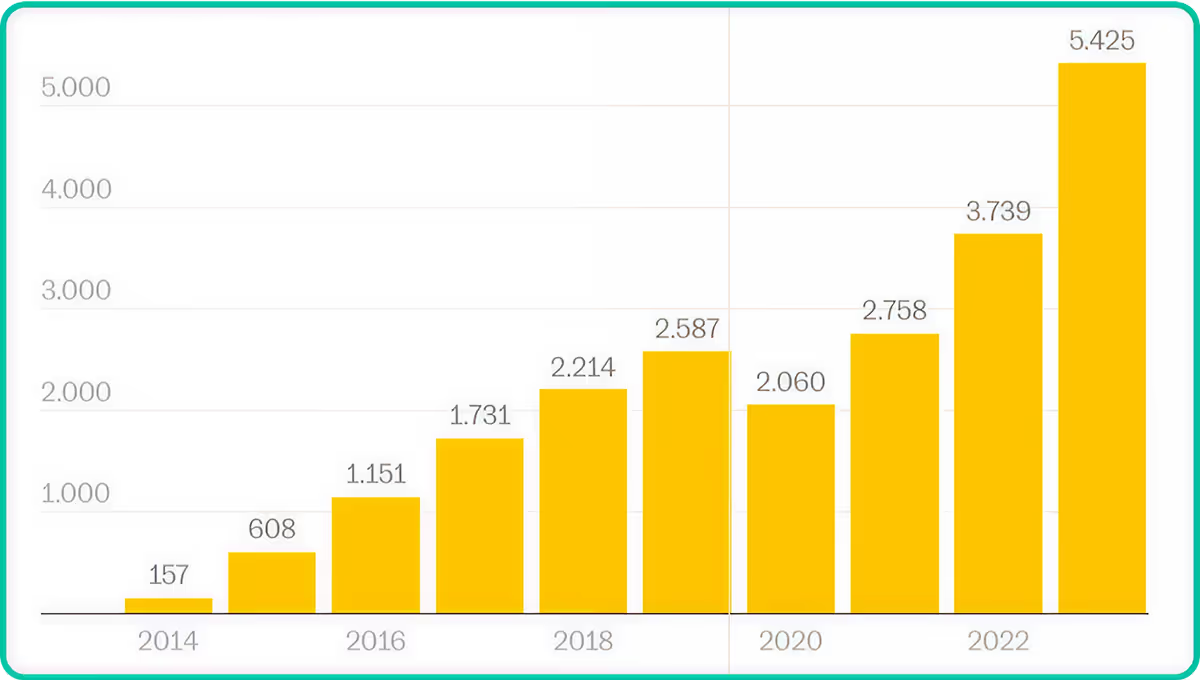
Since its launch, Spain’s Golden Visa program has issued over 14,576 Golden visas to non-EU citizens, generating substantial foreign investment in Spanish real estate and government bonds. The program’s popularity stemmed from its relatively low minimum investment requirement of € 500,000 compared to other European Union golden visa programs, making it an attractive option for foreign investors seeking EU residency.
The real estate investment route dominated applications, with most foreign nationals choosing property investment over alternative pathways, such as Spanish government bonds, venture capital funds, or investments in Spanish companies.
This preference for Spanish real estate significantly shaped the property market, ultimately leading to the program’s termination.
Nationalities that benefited from the Golden Visa program
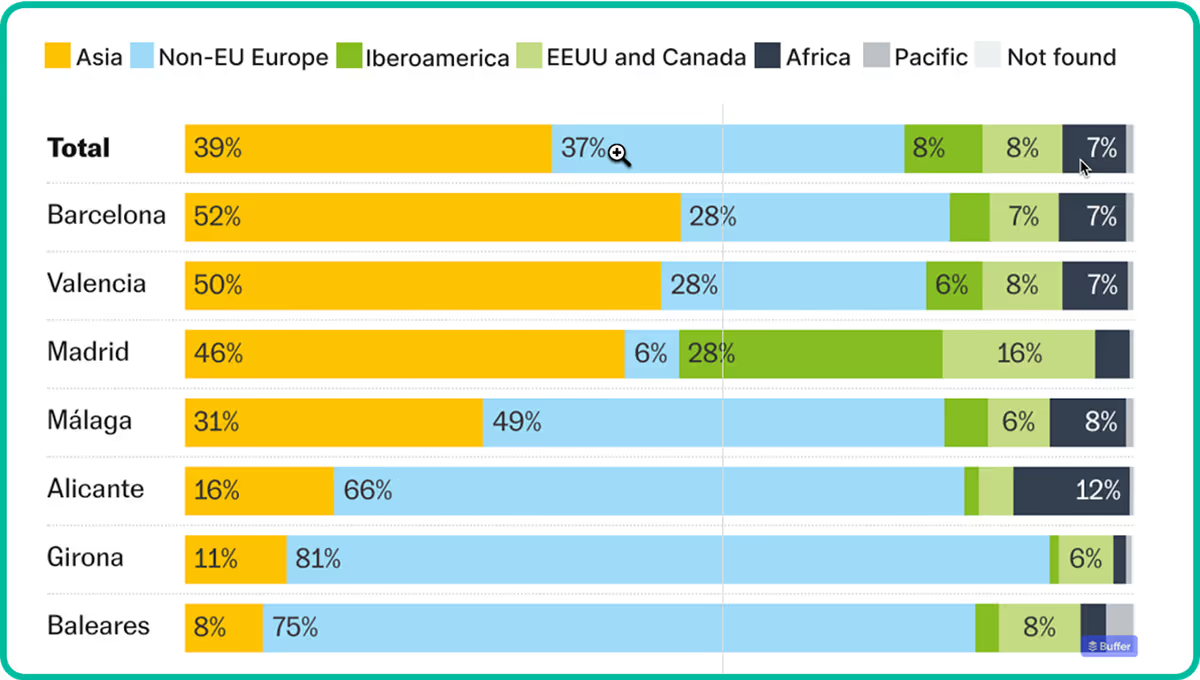
The chart below shows which nationalities benefited from Golden Visas during that period: Asian and non-EU nationals were the two main groups that opted in and secured a visa. In smaller proportions, citizens of Iberoamerica, the United States and Canada, and Africa were also successful.
Why Spain Ended the Golden Visa Program
The Spanish government cited rising housing costs and property speculation as the primary drivers of its decision to terminate the golden visa program.
Prime Minister Pedro Sánchez specifically criticised the golden visa programme for contributing to inflated home prices in major cities like Madrid and Barcelona, making it increasingly difficult for local residents to find affordable housing.

The decision followed mounting pressure from multiple sources, including the European Commission’s security concerns following Russia’s invasion of Ukraine.
European authorities are concerned that golden visa schemes across the EU could facilitate money laundering or provide residency pathways to individuals with questionable backgrounds.
Despite generating over €1 billion in foreign investment annually, the Spanish authorities determined that the social costs—particularly in the housing market—exceeded the economic benefits.
This decision aligns with broader European Union trends of restricting golden visa programmes in favour of more targeted immigration policies.
The Spanish Congress’s support for termination reflected concerns that the program primarily benefited wealthy foreign investors while creating affordability challenges for Spanish citizens, particularly young people seeking their first homes.
Protection for Existing Golden Visa Holders
Current Spanish golden visa holders retain full validity and renewal rights under the original program regulations, providing significant protection despite the program’s abolition.
The Spanish authorities confirmed that existing golden visa permits retain their legal status, allowing holders to continue living, working, and studying in Spain with full access to European Union travel benefits.
All applications submitted before the April 3, 2025, deadline will be processed under existing regulations, ensuring that investors who initiated their applications before termination can complete the process.
This protection extends to family members included in original applications, maintaining their access to Spanish schools, healthcare systems, and residency benefits.
Key protections for existing holders:
- Permit validity: All current golden visa residence permits remain fully valid
- Renewal rights: Holders can renew their permits following the original program rules
- Family coverage: Immediate family members retain all benefits and renewal rights
- Pathway to citizenship: Ten-year citizenship timeline remains unchanged for existing holders
- EU mobility: Schengen zone travel access continues without restriction
- Work authorisation: Right to work and establish businesses in Spain maintained
The annual visit requirement remains in place, meaning golden visa holders must visit Spain at least once per year to maintain their residence permits. However, full-time residency is not required, allowing holders to maintain their primary residence elsewhere while keeping their Spanish residency status.
Existing permit holders can pursue permanent residency after five years and Spanish citizenship after ten years, following the same timeline that existed under the original golden visa program. This pathway to Spanish citizenship remains one of the most valuable aspects of existing golden visa permits.
Is retiring to Spain still a viable option?
If you are now wondering whether you should still consider retirement in Spain, the short answer is yes.
There are other routes available to non-EU citizens for applying for Spanish residence. Let’s have a look at what is possible, how to complete the process and the financial implications of changing country.
The post-Brexit situation
Whilst Brexit has made it more difficult for British nationals to apply for Spanish residence, the door is still open for those who qualify under the work visa programme, the Digital Nomad scheme, or the Non-Lucrative Visa.
For retirees who wouldn’t be able to apply for the work visa, or as a Digital Nomad, the Non-Lucrative Visa is now the best way to achieve the dream of a life in the sun.

However, there is a process to go through, which starts with a visit to a Spanish Consulate in your country of residence. There are, for example, a number in the UK.
Alternative Spanish Residency Options
Multiple visa pathways remain available for non-EU citizens seeking Spanish residency, despite the termination of the Golden Visa program.
Each alternative targets specific applicant profiles and offers different benefits, investment requirements, and residency obligations compared to the former Spanish Golden visa program.
These alternatives provide legitimate pathways to Spanish residency and eventual Spanish citizenship.
However, they typically require more hands-on involvement or different financial commitments than the passive investment approach of the former golden visa programme.
Available Spanish residency alternatives:
Non-Lucrative Visa for Retirees
The non-lucrative visa serves as the primary alternative for retirees and individuals with passive income who don’t require work authorisation in Spain.
This option particularly appeals to retirees from the United States, the United Kingdom, and other non-EU countries seeking Spanish residency without employment obligations.
Non-lucrative visa requirements:
- Monthly income: €2,400 minimum for main applicant, plus €600 per family member
- Annual funds demonstration: Sufficient funds for one full year without working in Spain
- Health insurance: Comprehensive Spanish health insurance coverage required
- Criminal record: Clean background check from all countries of residence in the past five years
- Renewal timeline: Initial one-year permit, renewable for two-year periods
The program requires applicants to demonstrate they won’t seek employment in Spain, making it ideal for retirees with pension income, investment returns, or other passive income sources.
Unlike the former Spanish golden visa, this option doesn’t require any upfront investment in Spanish real estate or Spanish companies.
Applicants must maintain their income requirements throughout their residency period and can apply for permanent residency after five years of continuous legal residence.
The pathway to Spanish citizenship follows the standard 10-year timeline, identical to the former golden visa program.
The non-lucrative visa allows family members to accompany the main applicant, though each dependent increases the monthly income requirement by €600.
This family-friendly approach makes it viable for couples and families seeking Spanish residency through passive income rather than active investment.
Processing typically occurs through Spanish consulates in applicants’ home countries, with timelines ranging from 1 to 3 months depending on the completeness of the documentation and the consulate's workload.
Golden Visa qualification requirements
It’s best to check that you meet the basic income and health insurance requirements before starting the process.
Essentially, a provable annual income of at least €28,800 for the main applicant and €7,200 for each additional dependent will be necessary.
The income requirement isn’t limited to pension payments; other forms of passive income may qualify. Rental and investment income will be considered if there is a guarantee that it will last for at least the first year.
There are a few other administrative processes to complete, including filling out forms and registering documents; however, they aren’t as daunting as they might first appear.
I would suggest that the best way forward is to employ the services of one of the many immigration law firms that specialise in this type of work and can make your life a lot easier when submitting your application.
Non-lucrative visa applications
If your application is successful, you will receive a one-year visa, which can be renewed every two years, then for 5 years.
Permanent residence can then be obtained, and Spanish citizenship is available after 10 years of residence.
Changing your country of residence has financial implications. Your home country’s tax, pension, and investment systems will be very different from Spain’s.
What happens to State Pensions and Private Pensions
For those receiving state pensions, the first thing to note is that they are taxable in Spain. A personal income tax allowance is applied before any tax is payable, but it’s usually lower than in the UK.
On application, the UK Social Security office can pay in Euros to your Spanish bank account, although most people tend to have it paid into their UK account.
The next issue to consider is whether your existing personal pension arrangements are still as effective. Restrictions may apply to the level of services available from your UK pension provider.
In many cases, only basic information can be provided, and advice cannot be given to customers living outside the UK. This also applies to advice previously provided by UK financial advisers.
It is necessary to source a European-registered company with the necessary permissions to work with EU-based customers.
In some cases, transferring pensions to companies that can provide full services, including paying income in Euros and offering an investment platform that can be managed in line with long-term requirements, is a much more effective solution.
If investment markets are jittery, you may need to switch funds quickly and easily. This might not be possible, as a UK pension plan provider may be unable to deal with non-UK residents. An international SIPP may be the answer for you.
Optimal Investments for Retirees
Taxation is the main driver in deciding which investment plans to hold when a Spanish resident.
A good example is an ISA (Individual Savings Account). Whereas ISAs are the most tax-efficient product to invest in when a UK resident, this isn’t the case in Spain. ISAs are not sheltered from Income, Capital Gains and Dividend Tax.
The good news is that there are investment products which are almost as tax-efficient for Spanish residents.
Spanish Compliant Investment Bonds are a popular way to shield savings from taxation and provide supplementary income.
The tax on income withdrawals is lower than the general taxation, capital gains, or dividend tax. This is because any withdrawal is considered part capital repayment and part investment growth.
SCIBs aren’t liable to Savings Income, Dividend or Capital Gains tax in Spain if the underlying investment product complies with the relevant legislation.
An EU Insurance Company must issue the policy; a local fiscal representative must be in place, and only UCITS funds are allowable for portfolio allocation.
There are literally thousands of UCITS funds available within the EU, many managed by companies based in Ireland and Luxembourg, allowing you access to global markets.
Taxation
Whilst it’s possible to complete your annual tax return yourself, it’s usually best to use a local tax adviser with the necessary knowledge and experience to deal with expats.
In most parts of Spain, it’s relatively easy to find a suitable tax adviser. Do shop around, though, as they can be quite expensive.
Choose your tax adviser based on value rather than only on cost. We don’t want to feel that we’re paying too much, but we should also be wary of paying too little.
Each Autonomous Community can set local tax rates, provided they comply with national tax rules. For example, in Andalusia, Inheritance Tax and Wealth Tax have effectively been abolished for most people.
This isn’t necessarily the case in other Autonomous Communities; it’s best to check before finally deciding on where you want to live. The Autonomous Community tax policy could be the tiebreaker when thinking about where to settle in your new home.
A combination of using all available allowances and investing in the most tax-effective products could mean you pay less tax in Spain than in your home country.
In summary, if you are considering retiring in Spain, preparation is key.
You will need to speak with professionals in several important areas; most will offer a free initial consultation, which will give you a good idea of what your situation will look like post-emigration.
Financial Planning and Next Steps
Property ownership in Spain remains completely unrestricted for foreign nationals, allowing UK and non-EU citizens to purchase unlimited Spanish real estate without obtaining Spanish residency.
This separation of property rights from residency status means former Spanish Golden Visa prospects can still invest in Spanish real estate for portfolio diversification or lifestyle purposes.
Professional guidance has become essential for navigating the complex landscape of European residency options following the termination of the Spanish golden visa.
Immigration attorneys, tax advisors, and financial planners specialising in international mobility can help investors evaluate alternatives based on their specific circumstances, tax situations, and long-term objectives. At Axis Financial Consultants, we provide valuable assistance, advice and guidance.

Key considerations for future planning:
- Tax implications: Each European residency program carries different tax obligations and treaty benefits
- Timeline flexibility: Some programs offer faster citizenship pathways than others
- Family considerations: Varying requirements for family members and education access
- Business interests: Programs that facilitate business operations versus passive investment
The European Union’s evolving approach to investment-based residency suggests continued program modifications across member states.
Investors should consider program stability and potential future changes when selecting alternatives to the former Spanish Golden Visa program.
For existing Spanish golden visa holders, maintaining compliance with renewal requirements while exploring additional European residency options provides maximum flexibility.
Some investors pursue multiple European residencies to optimise tax treatment, business opportunities, or lifestyle preferences.
Immediate action items for different investor categories:
For former Spain golden visa prospects:
- Consider a non-lucrative visa if seeking Spanish residency without work requirements
- Consult a tax advisor regarding the implications of different European residency programs
For existing Spanish Golden Visa holders:
- Ensure compliance with renewal requirements to maintain a valid status
- Document annual Spanish visits and maintain qualifying investments
- Plan a pathway to permanent residency after five years of valid residence
- Consider additional European investments for diversification
For new Spanish Golden Visa applications:
- If still employed, either a work visa or a digital nomad card will be needed
- Retirees applying for a non-lucrative visa should research the specific requirements for the program
- Apply for a national identity card
- Seek advice on issues related to retirement planning, particularly those related to UK pensions transfers
The termination of Spain’s golden visa program marks a significant shift in European immigration policy, but numerous alternatives remain for investors seeking European Union residency through investment.
Professional guidance and careful planning ensure investors can navigate this evolving landscape successfully while achieving their international mobility objectives.
Frequently asked questions
Will I be able to retain my golden visa?
If you were already in possession of a Spanish golden visa before 3 April 2025, you are legally permitted to retain it, provided you continue to renew it in accordance with Spanish law.
What visa do I need if I work in Spain?
For those still employed, either a work visa or a digital nomad card is required. It is best to contact a relocation specialist for guidance.
What visa do I need if I retire to Spain?
Retirees can apply for a non-lucrative visa. You will need to prove that you have sufficient income to sustain yourself and that you have accommodation and health cover.
If you would like to find out more, please get in touch.

.avif)